← Back
Verbs & Present Tense Conjugation
Regular and irregular verbs, modal verbs and separable verbs
Aktionsart vs Aspekt im Deutschen
Aktionsart vs aspect in German
German lacks grammatical aspect; uses Aktionsart
Lexical aspect vs grammatical aspect distinction
Telizität und Verbklassen
Telicity and verb classes
Vendler: states, activities, achievements, accomplishments
Event structure typology applied to German
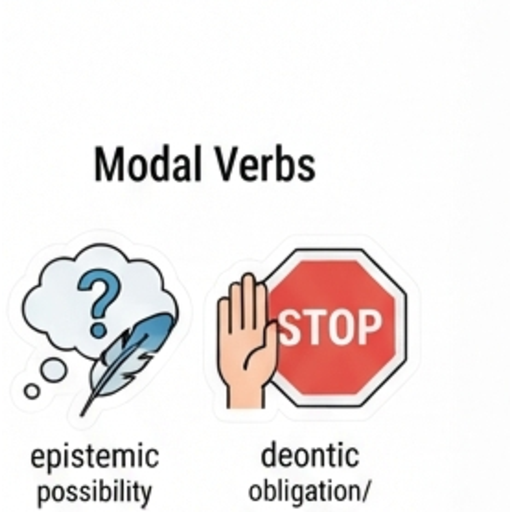
Modalverben: epistemisch vs deontisch
Modal verbs: epistemic vs deontic
Er muss zu Hause sein (epistemic) vs müssen (deontic)
Two semantic dimensions of German modals
Konjunktiv I: System und Gebrauch
Subjunctive I: system and use
indirect speech, formal register
Full paradigm and discourse functions of Konjunktiv I
Konjunktiv II: Irrealität und Höflichkeit
Subjunctive II: irreality and politeness
hypotheticals, polite requests, wishes
Forms and functions of the second subjunctive
Würde-Periphrase vs Synthetischer Konjunktiv
würde-periphrasis vs synthetic subjunctive
ich würde gehen vs ich ginge
Analytic vs synthetic subjunctive II forms
Passivdiathesen: werden, sein, bekommen
Passive diatheses: werden, sein, bekommen
Vorgangs-, Zustands-, Rezipientenpassiv
Three passive constructions with different functions
Funktionsverbgefüge: Analyse
Light verb constructions: analysis
zur Aufführung bringen = aufführen
Verb-noun collocations in formal/bureaucratic German
Modalpartikeln: pragmatische Funktionen
Modal particles: pragmatic functions
ja, doch, mal, eben, halt, wohl, schon
Discourse-pragmatic functions of flavouring particles
Tempus-Modus-Interaktion
Tense-mood interaction
Konjunktiv across tenses; sequence of tenses
How tense and mood interact in complex sentences