← Back
Nouns, Articles & Gender
Turkish nouns, lack of grammatical gender, definiteness via accusative case, noun suffixes
Turkish as an agglutinative language
typological classification and implications
varies
One morpheme per suffix; transparent morpheme boundaries; highly regular
SOV typology and its correlates
features predicted by SOV word order
varies
SOV predicts postpositions, genitive before noun, relative clause before head -- all true in Turkish
Head-final vs. head-initial parameters
Turkish as consistently head-final
varies
Verb final, postpositions, adjectives before nouns, relative clauses before heads
Nominal vs. verbal sentences: distributional facts
when zero copula is licensed
varies
Zero copula licensed in 3rd person present; other persons require overt copula suffix
Izafet construction: three-way typology
three types of Turkish noun compounds
varies
Type I: bare+bare; Type II: bare+possessive; Type III: genitive+possessive
Incorporation in Turkish
object incorporation into verb complex
varies
Yemek yemek (to eat food) -- cognate object; limited true incorporation
Switch-reference in converb chains
same vs. different subject in -ip chains
varies
-İp requires same subject; diye and -ken allow different subjects
Pro-drop in Turkish: full analysis
subject and object drop conditions
varies
Subject drop: always licensed; object drop: licensed when recoverable from context
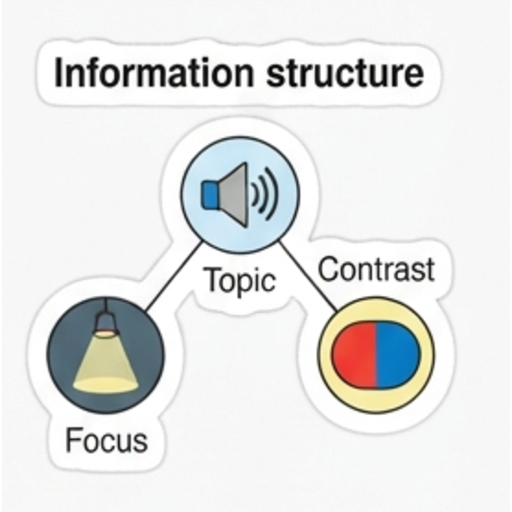
Information structure: topic, focus, background
Turkish information structure in detail
varies
Pre-verbal position = focus; post-verbal = background/afterthought; initial = topic
Turkish clause structure: generative analysis
VP-internal subject hypothesis
varies
Subjects originate inside VP in minimalist analysis; Turkish evidence from scrambling