← Back
Alphabet & Pronunciation
English alphabet, vowels, key consonants, silent letters, and basic pronunciation rules
British vs American: vowels
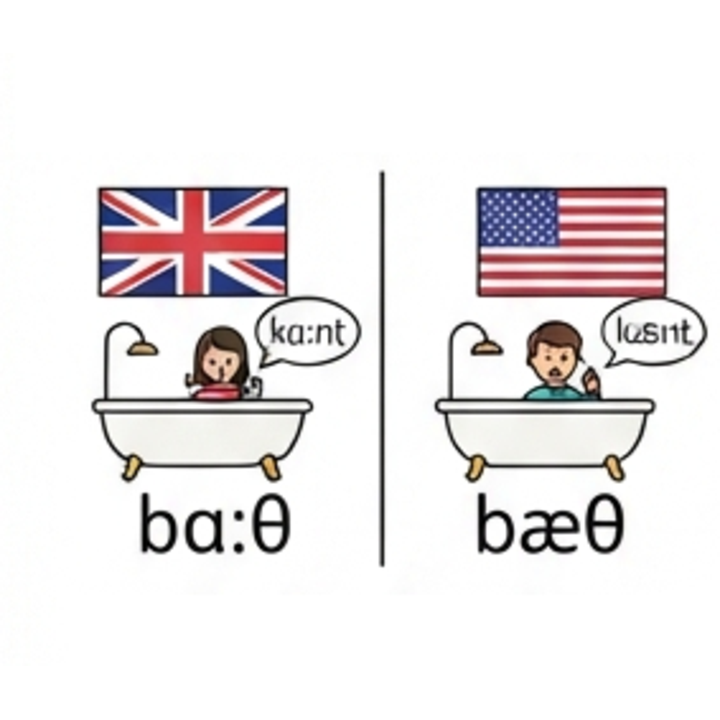
bath [bɑːθ] British / [bæθ] American; can't [kɑːnt] / [kænt]
British vs American: rhotic r
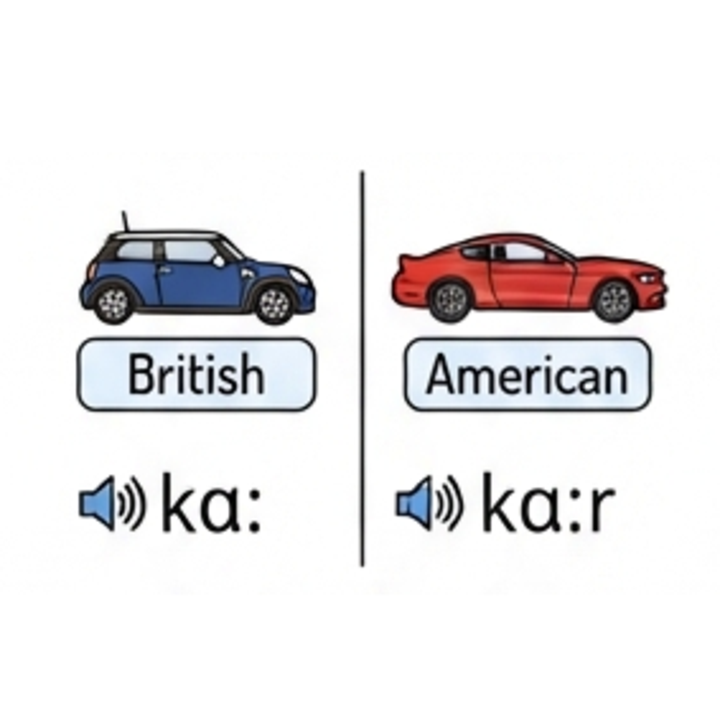
British drops final r: car [kɑː]; American keeps it: car [kɑːr]
American English: t as a flap
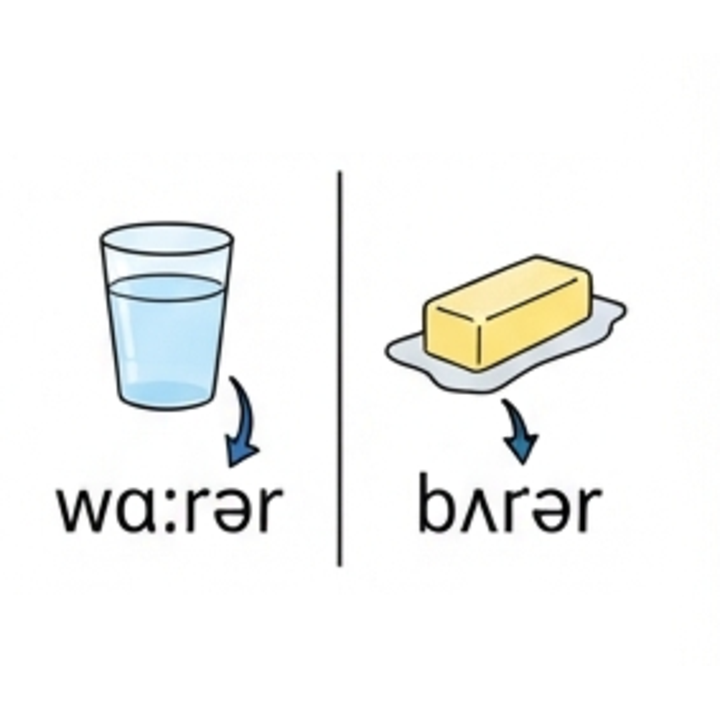
American: "water" = [wɑːɾər]; "butter" = [bʌɾər] — t sounds like d
Phonemic alphabet: vowels /iː ɪ e æ.../
IPA shows exact pronunciation; useful for dictionaries
/iː, ɪ, e, æ, ɑː, ɒ, ɔː, ʊ, uː, ʌ, ɜː, ə/
Phonemic alphabet: consonants
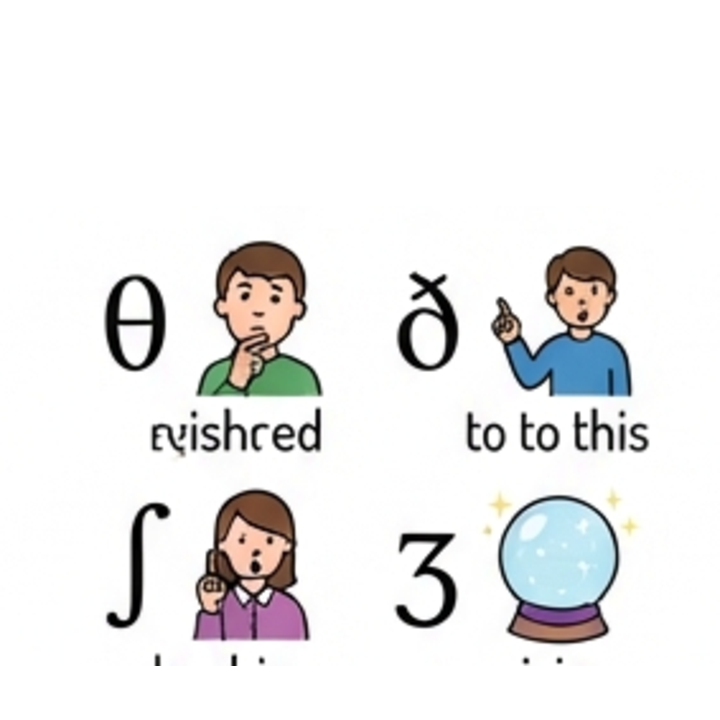
IPA consonants; θ = think, ð = this, ʃ = she, ʒ = vision
/p, b, t, d, k, g, f, v, θ, ð, s, z, ʃ, ʒ, tʃ, dʒ.../
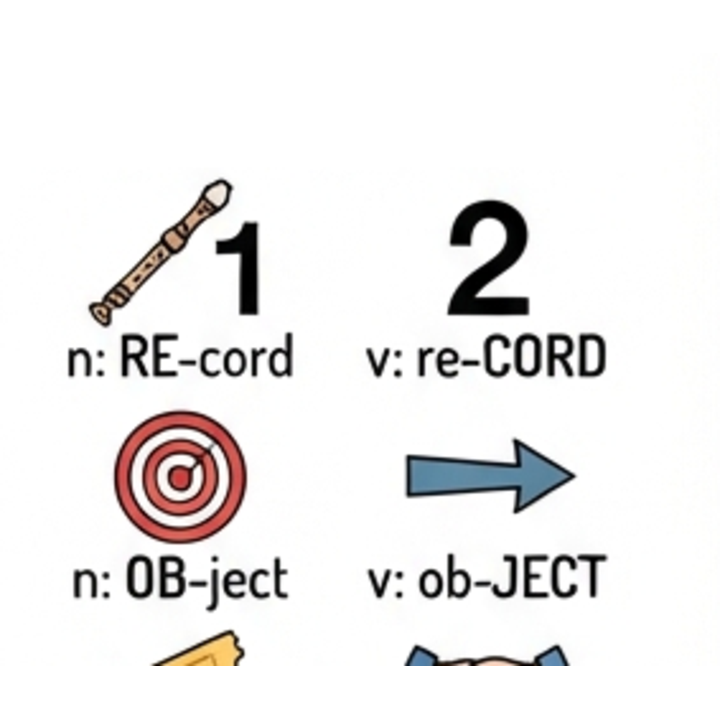
Stress shift: noun vs verb pairs
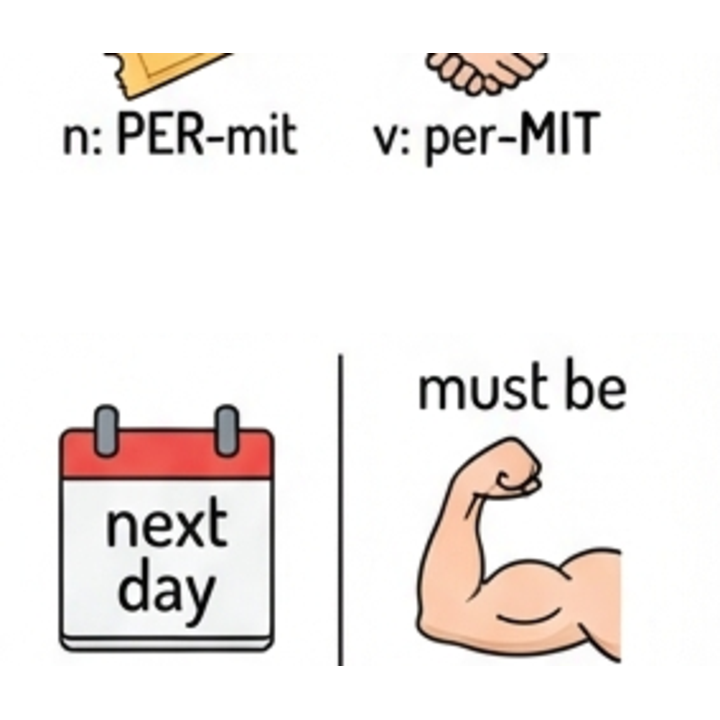
RE-cord (n) / re-CORD (v); OB-ject (n) / ob-JECT (v); PER-mit (n) / per-MIT (v)
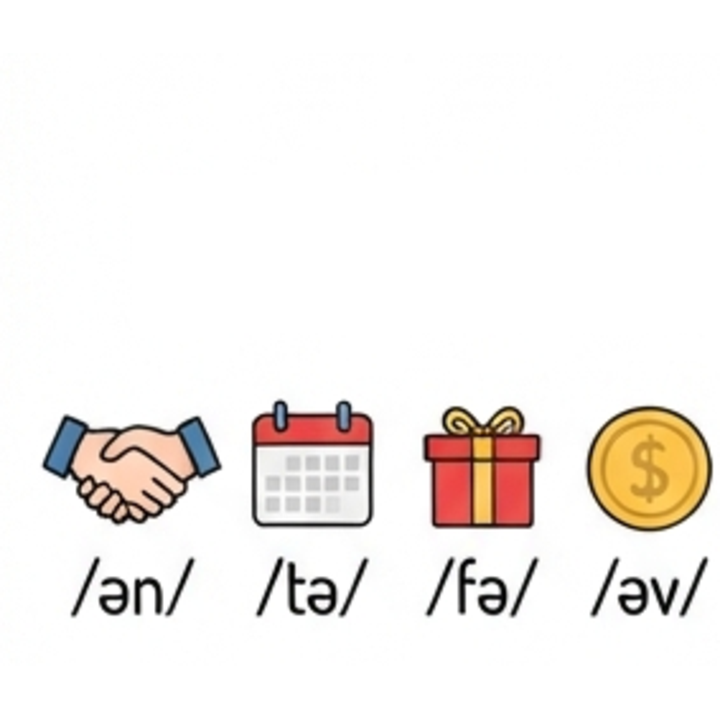
Weak forms in connected speech
and = /ən/, to = /tə/, for = /fə/, of = /əv/ — reduced in normal speech
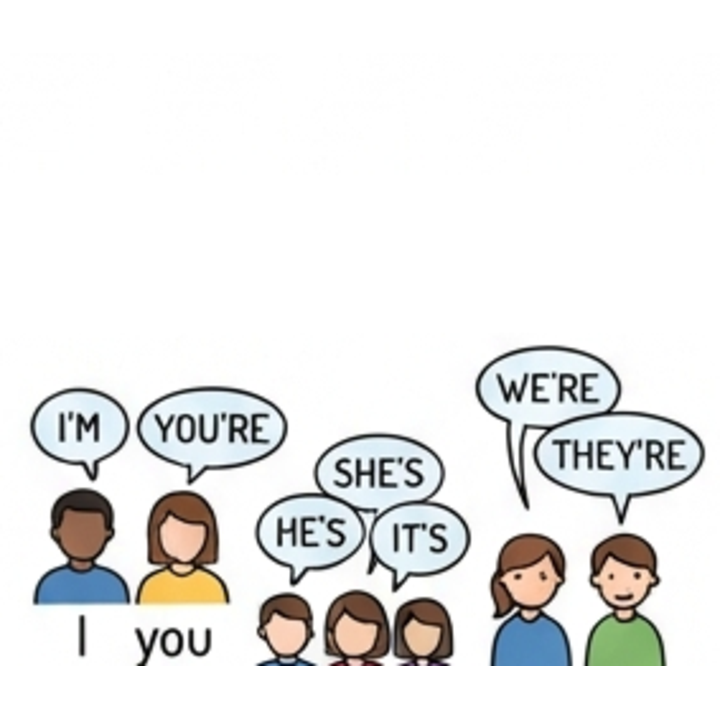
Contractions in spoken English
I'm, you're, he's, she's, it's, we're, they're — always used in spoken English
Elision: sounds dropped
"next day" → "nex day"; "must be" → "muss be" — consonants dropped in clusters
Assimilation: sounds change
"ten people" → "tem people" — n changes to m before p in fast speech