← Back
Modal Verbs & Auxiliary Verbs
Can, will, should, must and other modal verbs expressing ability, future, advice, and obligation
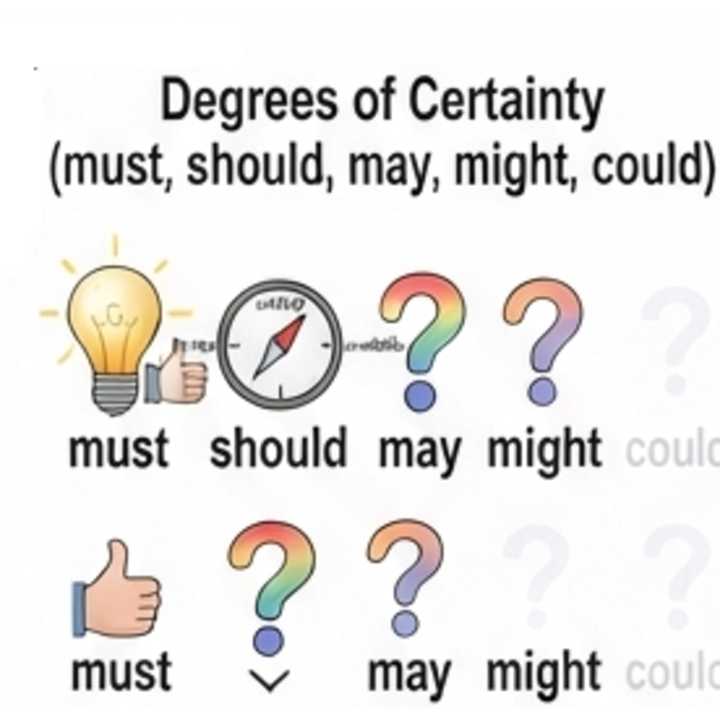
Epistemic modality: degrees of certainty
must (certain) > should (probable) > may/might (possible) > could (less certain)
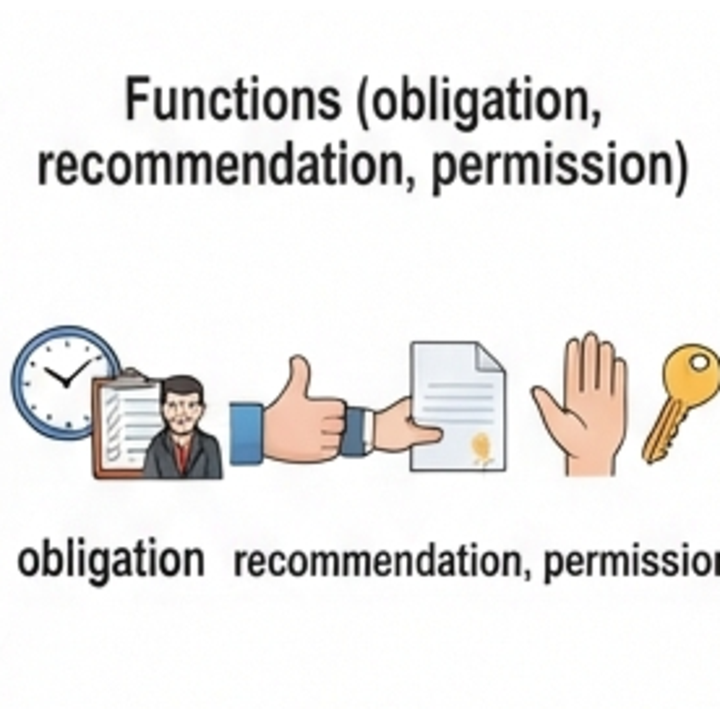
Deontic modality: obligation and permission
must/have to (obligation) / should/ought to (recommendation) / may (permission)
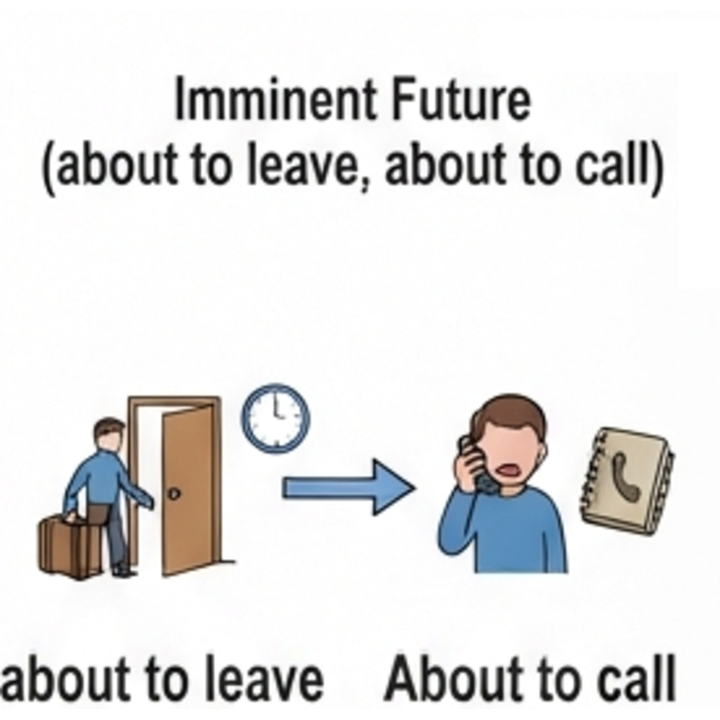
be about to — imminent action
She's about to leave / I was about to call you — it will happen very soon
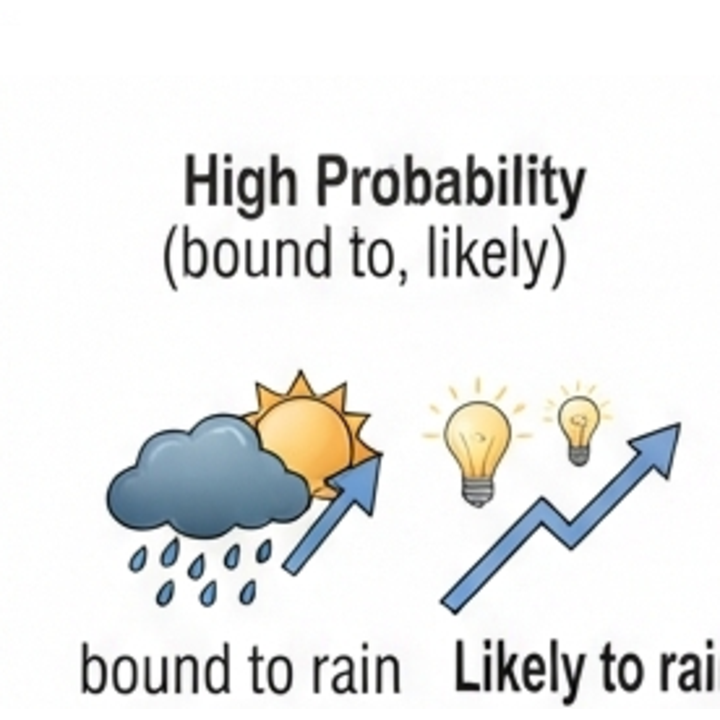
be bound to / be likely to
It's bound to rain / She's likely to succeed — high probability expressions
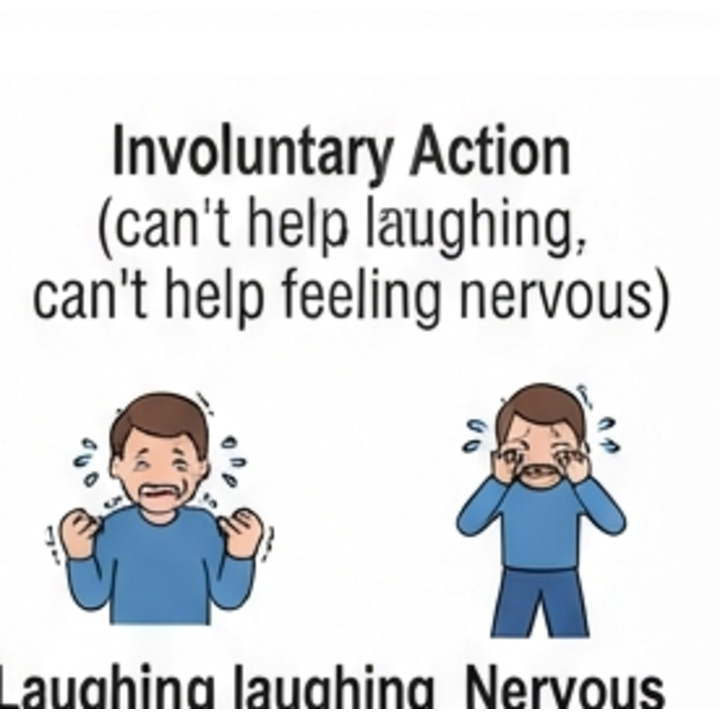
can't help + -ing
I can't help laughing / She can't help feeling nervous — involuntary action

may well / might well
This may well be the solution / She might well be right — stronger possibility
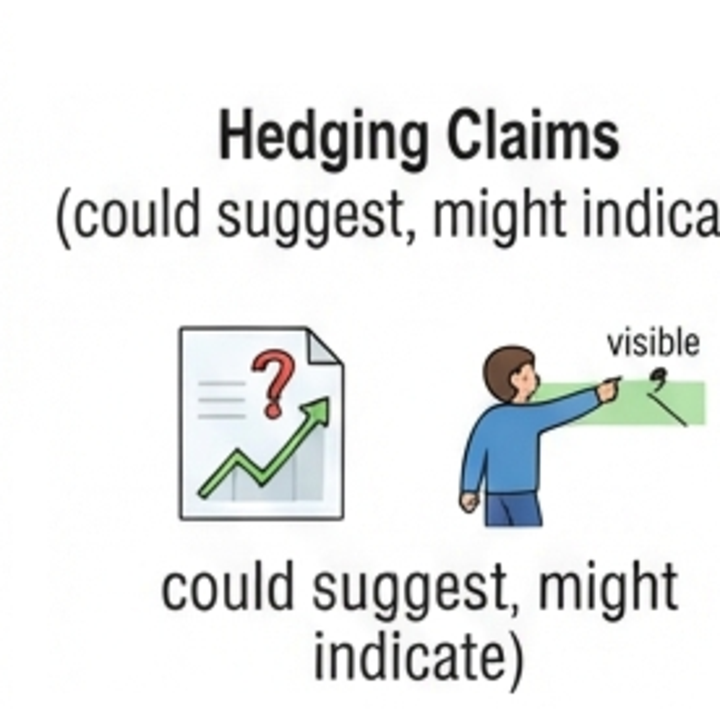
Distancing modals in academic writing
The results could suggest... / This might indicate... — hedging claims in writing
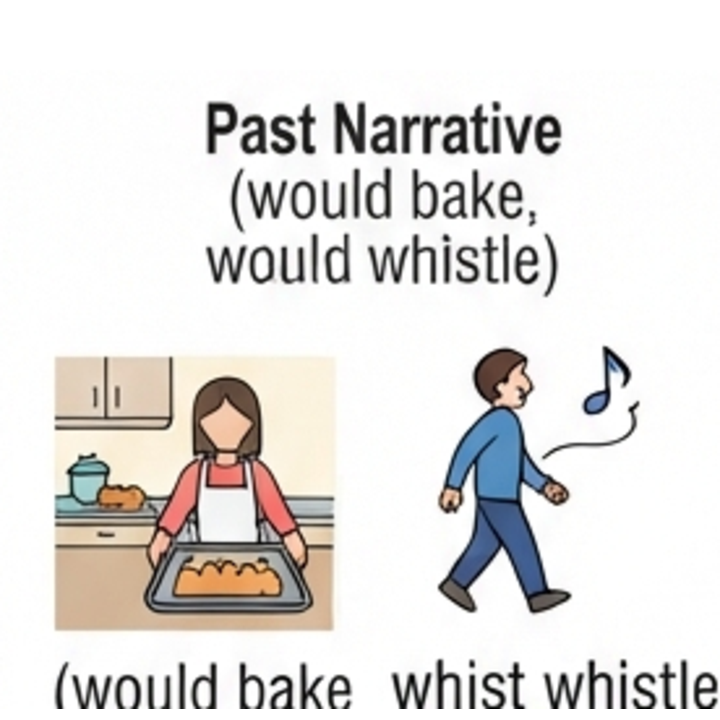
would — habitual past in narrative
Every Sunday, she would bake bread / He would always whistle — past narrative
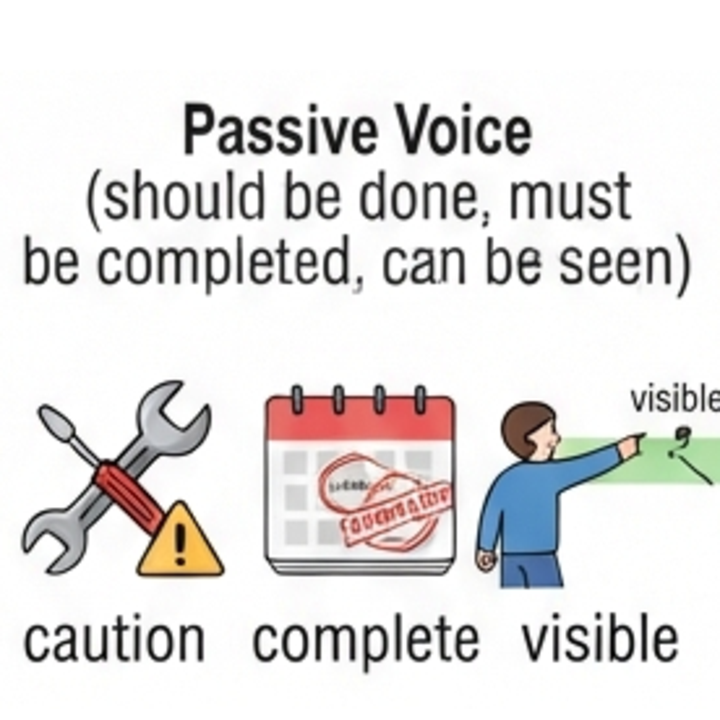
Modal + passive: should be done
This should be done carefully / It must be completed by Friday / It can be seen

be to + infinitive — formal future
The president is to visit next week / Talks are to resume tomorrow — official