← Back
Pronouns & Basic Sentence Structure
Personal pronouns, ειμαι/εχω, pro-drop word order and basic questions
Αδύνατες αντωνυμίες: με, σε, τον/την/το
Weak object pronouns (clitics)
meh, seh, ton/tin/to
Unstressed pronouns attached closely to the verb
Θέση εγκλιτικού πριν το ρήμα
Clitic placement before the verb
Τον βλέπω.
In statements, the clitic goes right before the conjugated verb
Θέση εγκλιτικού μετά την προστακτική
Clitic placement after the imperative
Δες τον!
With commands, the clitic attaches after the verb
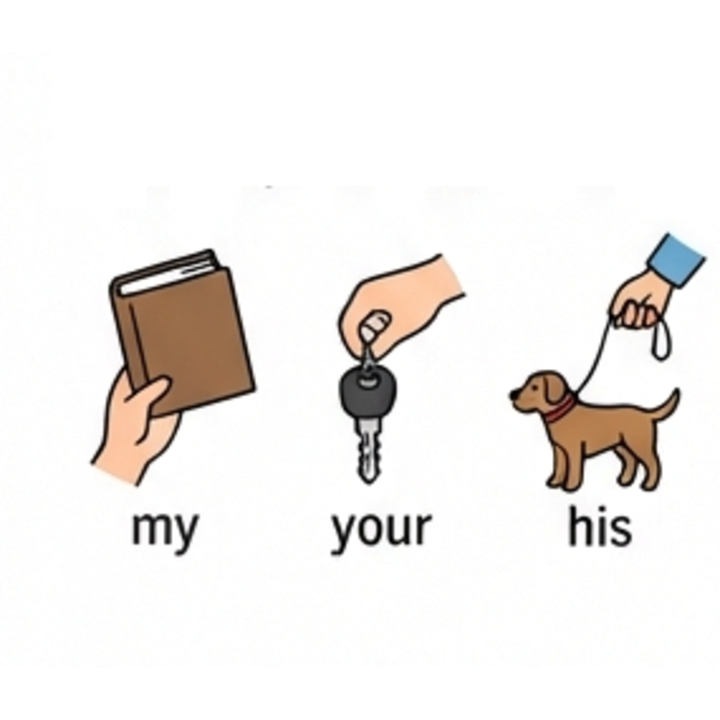
Κτητικές αντωνυμίες: μου, σου, του/της/του
Possessive pronouns as enclitics
moo, soo, too/tis/too
Unstressed possessives follow the noun they modify
το βιβλίο μου
my book
to vivLEEo moo
Possessive enclitic comes right after the noun (+ article)
Τονισμένες αντωνυμίες μετά από πρόθεση
Strong pronouns after prepositions
σε μένα, με εσένα
Prepositions require the stressed pronoun form, not the clitic
αυτός/αυτή/αυτό vs εκείνος
this vs that
af-TOS vs eh-KEE-nos
αυτός = this (near); εκείνος = that (far)
Ελεύθερη σειρά λέξεων για έμφαση
Flexible word order for emphasis
-
Greek allows reordering to highlight new or focused information
Αυτός που...
the one who...
af-TOS poo
Introduces a relative clause defining a person
Ερωτηματικές αντωνυμίες: ποιος, ποια, ποιο
Who (m/f/n)
pyos, pya, pyo
Agrees in gender with the person/thing asked about